24NRM02 ConcenSus
Establishing traceable concentration measurements of particles for a more sustainable industry
Establishing traceable concentration measurements of particles for a more sustainable industry

The ConcenSus project will develop validated methods, modelling algorithms, and documentary standards to improve metrological traceability and reduce uncertainty in number concentration measurements of industry-relevant engineered particles in advanced materials and particles representing typical environmental pollutants.

To date methods for particle number concentration have only been standardised for simple monodispersed particle suspensions. Method transfer to complex particles is challenging, especially in the case of ensemble methods as they require characterisation of input parameters such as particle density and particle RI, which currently are lacking.

The project aims to improve the metrological traceability and reduce uncertainty of number concentration measurements of industry-relevant engineered particles and particles representing typical environmental pollutants, by providing validated, traceable and standardised approaches for particle density and RI determination.

A new interlaboratory comparison (@VAMAS) on number concentration measurement of complex, industry-relevant particles in the size range from 1 nm to 1000 nm using different particle counting methods (e.g. spICP-MS, PTA, microscopy) and ensemble methods (e.g. SAXS, MADLS, CLS, UV-Vis, Raman spectroscopy),
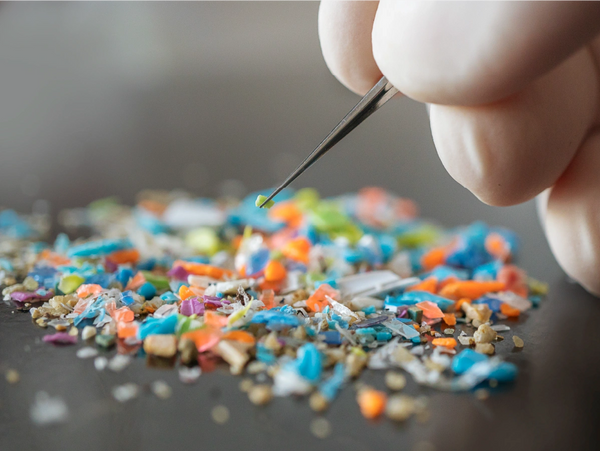
Preparation of Representative Test Materials (RTMs) and value assignment.
The aim of this WP is to develop RTMs for number concentration measurements of nano‑ and sub‑micrometre particles that i) are relevant for health and personal care industries, ii) resemble semiconductor or energy materials used in commercial products, or iii) represent persistent and novel environmental pollutants such as nano‑ and micro‑plastics.

Verification of the performance of number concentration measurements for relevant RTMs
The aim of this WP is to evaluate the performance of established reference and laboratory methods for number concentration measurements of complex particles (using the RTMs provided by WP1), as well as to assess capabilities of novel methods, such as FCCS/FCS, establish a traceability chain for ensemble methods and to reduce measurement uncertainty associated with number concentration measurements overall

Characterisation and validation of the particle material parameters density and refractive index.
The aim of this WP is to develop traceable measurement methods for characterisation of the particle material parameters, particle density and refractive index (RI), to validate the modelling of such material parameters in the measurement process and to improve the mathematical models so that they are applicable to industry‑relevant particles and particle‑based pollutants
Creating impact
The aim of this work package is to actively engage with the standardisation committees ISO/TC 229, CEN/TC 352, ISO/TC 24/SC 4 and ISO/TC 276, along with the users of the emerging standards to ensure that the project’s outputs align with their needs (Obj. 5). Close engagement with pre-standardisation bodies (VAMAS TWA 34) is also envisaged.